
When a Device Can Separate During Use: What the ENROUTE Recall Teaches OR Teams About Equipment Vigilance

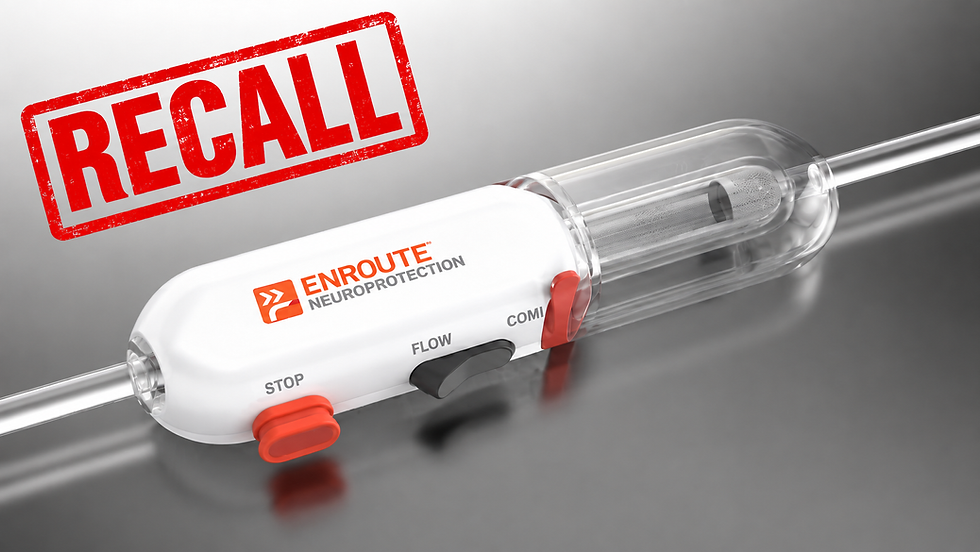
The Boston Scientific ENROUTE recall is a reminder that device safety depends on more than opening the right product—it also depends on traceability, communication, and knowing when equipment has been removed from use.
What happens when a device looks ready for use—but a known failure may happen during the procedure?
That is the operational question behind a recent Class I recall involving Boston Scientific’s ENROUTE Transcarotid Neuroprotection System.
The FDA updated its communication on August 26, 2026, confirming that the removal of certain ENROUTE Transcarotid Neuroprotection System and ENROUTE Transcarotid Neuroprotection System Plus devices had been classified as a Class I recall—the FDA’s most serious recall classification.
Boston Scientific initiated the removal of specific lots after reports of the arterial sheath tip separating, or partially separating, during use.
According to the FDA, a separated tip may require endovascular or surgical retrieval. As of July 9, Boston Scientific had reported one serious injury and no deaths associated with the issue.

What the Device Does
The ENROUTE system is designed for use during transcarotid procedures and works by reversing blood flow at the treatment site to transport embolic material away from the carotid circulation before and during lesion manipulation.
For surgical professionals, however, the most important lesson here is not how to perform the procedure.
It is what happens operationally when a device already integrated into a specialized procedural workflow is suddenly removed from use.
Why It Matters to Surgical Professionals
When a recall affects a specialized device, identifying the affected inventory is only the beginning.
The FDA states that affected products should not be used and that facilities should identify and segregate them, stop further use and distribution, and return them to Boston Scientific. Facilities were also instructed to notify relevant personnel and alert any other facility to which affected devices had been forwarded.
That creates several important operational questions:
Can your facility quickly identify the affected lot?
Does everyone who uses the device know about the recall?
Has affected inventory already moved into another department or facility?
Has the recalled product been clearly separated from usable inventory?
And perhaps most importantly:
How does the frontline team know that a device sitting in the room has actually cleared the recall process?
Device Safety Is Also an Information Problem
When we think about equipment safety in the OR, we often think about physical inspection.
Is the packaging intact?
Is anything visibly damaged?
Do the components appear correct?
Those habits still matter.
But recalls add another layer that frontline inspection alone cannot solve.
A device may appear normal and still be affected by a known manufacturing or product issue associated with a specific lot.
That means safe equipment management also depends on information moving correctly through the organization.
Supply Chain may receive the recall.
Leadership may receive the notice.
Clinical Engineering may become involved.
But ultimately, the information has to reach the location where the device could actually be opened and used.
An Easy Detail to Miss: The Product Name in Inventory
The FDA specifically notes that these devices may appear under Silk Road Medical within hospital inventory systems.
That detail matters.
Boston Scientific completed its acquisition of Silk Road Medical in 2024, but legacy naming inside inventory systems can make product identification more complicated.
For an operations team managing a recall, knowing every name under which a device may appear can be the difference between locating affected stock quickly and overlooking it.
It is another reminder that recall management is not simply:
“Search for this product name.”
It is:
“Understand how this product exists inside our system.”
What Strong Recall Communication Looks Like
A strong response should be able to answer:
What product is affected?
Which lots are affected?
Where are those lots located?
What other names might the device appear under?
Who routinely uses it?
Has affected inventory been segregated?
Have all relevant teams received the update?
If products were transferred elsewhere, were those facilities notified?
Those questions turn a recall notice into an operational response.
What to Watch Next
The FDA first issued an Early Alert about the issue on July 24, 2026. On August 26, it updated the communication and confirmed the Class I recall classification.
That timeline reinforces an important point for surgical professionals:
Device-safety communications can evolve.
An initial alert may later gain additional information, affected lots, instructions, or formal recall classification.
For that reason, organizations need systems that do more than distribute the first notice.
They also need a way to communicate the update.
FTLOS Takeaway
A recalled device does not protect the patient simply because someone received an email.
The protection comes when the organization can identify the affected product, remove it from use, communicate the action to everyone who could encounter it, and verify that the message reached the point of care.
Frontline surgical professionals do not need to independently interpret or manage device recalls.
But understanding how recall systems work—and knowing where to verify equipment status within your facility—is part of being an informed member of the perioperative team.
FTLOS Question: When a device recall happens at your facility, how do you know the equipment in your room has actually been cleared for use?
Sources: U.S. Food and Drug Administration, Medical Device Recall Communication and Recall Database.


Comments