
Two Perioperative Drug Recalls Every Surgical Team Should Check Today

Two nationwide recalls published by the U.S. Food and Drug Administration on September 21, 2026 should be on the radar of every anesthesia department, hospital pharmacy and procedural area. One involves a bag labeled as 0.9% sodium chloride that may actually contain concentrated potassium chloride. The other involves premixed dexmedetomidine containing particulate matter.
The products, hazards and corrective actions are different. The shared lesson is not: "be more careful." It is that familiar packaging and routine workflows can create dangerous blind spots unless recall communication reaches every place a product may be stored or used.
Recall one saline may contain concentrated potassium chloride
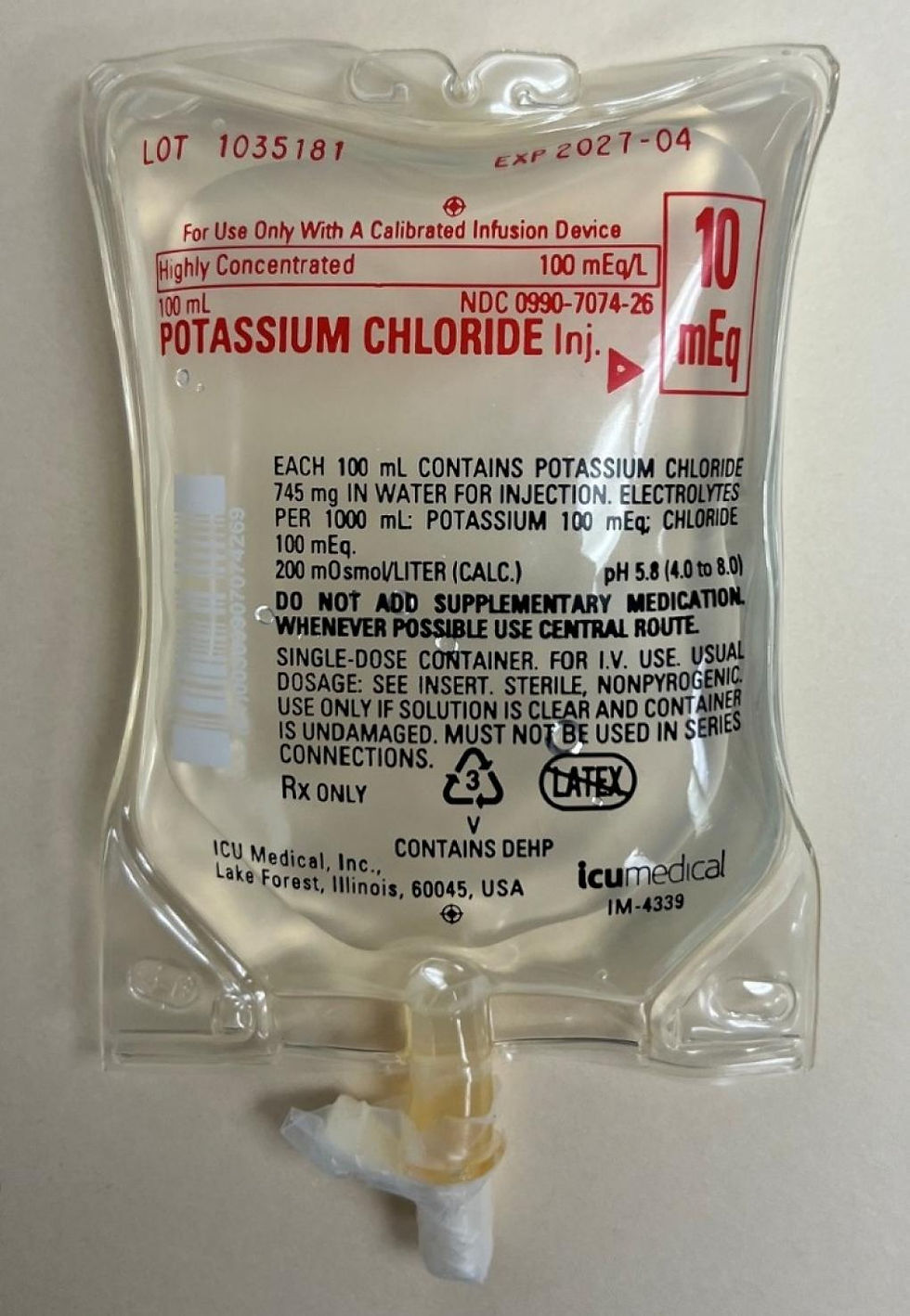
Otsuka ICU Medical recalled one lot of 0.9% Sodium Chloride Injection, USP, 100 mL after a customer found a 10 mEq concentrated potassium chloride bag inside an overwrap labeled as saline. The affected saline is NDC 0990-7984-23, lot 1042188, with an expiration date of October 31, 2027.
The outer overwrap may identify the product as saline while the inner bag is correctly labeled as potassium chloride. That detail matters. If a clinician relies on the overwrap and does not verify the inner container, a high-alert electrolyte could be administered as if it were routine saline.
FDA warned that inadvertent administration of highly concentrated potassium chloride could cause muscle weakness, paralysis, hypotension, cardiac dysrhythmias, cardiac arrest or death. No adverse events had been reported when the announcement was published. Facilities were instructed to locate the affected lot, quarantine it and discontinue use.
Recall two particulate matter in dexmedetomidine

Par Health recalled two lots of Dexmedetomidine HCl in 0.9% Sodium Chloride Injection, 400 mcg per 100 mL, after particulate matter identified as cellulose or stopper material was found in the product. The recalled lots are 87558, expiring February 2027, and 88802, expiring April 2027. The NDC is 42023-187-01.
Dexmedetomidine is used for sedation of intubated, mechanically ventilated adults and for non-intubated adults before or during surgical and other procedures. The recalled lots were distributed to wholesalers nationwide. Hospital pharmacies and downstream locations should immediately stop use and distribution.
According to the recall notice, injecting a product containing particulate matter could lead to pulmonary emboli, obstruction of other blood vessels, tissue death, organ damage or inflammation of a vein that may contribute to clotting. No related adverse events had been reported at publication.
Why these recalls matter in the perioperative environment
The operating room depends on rapid, repeatable workflows. That efficiency is necessary, but it can also create familiarity bias. A bag that looks like saline may be treated like saline. A premixed sedative may be assumed ready for use because it arrived from a trusted supplier.
Neither assumption replaces medication verification. Teams should confirm the product name, concentration, lot and expiration on the container that will actually be connected to the patient. They should also inspect injectable products for visible particles or container defects when the product and labeling permit visual inspection.
Recall response must extend beyond central pharmacy. Products may be stored in anesthesia workrooms, automated dispensing cabinets, pre-op, PACU, intensive care, interventional suites, emergency carts or satellite medication rooms. A recall is not closed simply because the main pharmacy shelf was checked.
What perioperative teams can do now
Search for saline lot 1042188 and dexmedetomidine lots 87558 and 88802 in every relevant inventory location.
Quarantine affected product and follow pharmacy, manufacturer and FDA return instructions.
Verify the inner container label after removing an overwrap. Do not allow the outer package to become the final medication check.
Reinforce independent verification for concentrated electrolytes and other high-alert medications according to facility policy.
Inspect eligible injectable products for particles, discoloration or container damage before administration.
Make recall alerts role-specific. Tell anesthesia, nursing and procedural staff exactly what to look for, where affected products may be stored and what action to take.
The larger OR lesson
Medication safety is not protected by one final check. It depends on purchasing, receiving, storage, pharmacy verification, automated dispensing, preparation, labeling and administration working as a connected system.
These recalls are an opportunity to test that system. Can your organization identify a specific lot after it has left central pharmacy? Can it reach every procedural location before the next case begins? And will the clinician holding the product verify what is inside the packaging rather than what they expect to see?
Otsuka ICU Medical LLC. (September 17, 2026; posted by FDA September 21). “Voluntary recall of 0.9% Sodium Chloride Injection due to a product mix-up with potassium chloride.” U.S. Food and Drug Administration. Cite for the affected saline lot, the potassium chloride bag found inside a saline overwrap, and the recall instructions. FDA
Par Health. (September 18, 2026; posted by FDA September 21). “Voluntary recall of two lots of dexmedetomidine in 0.9% sodium chloride due to particulate matter.” U.S. Food and Drug Administration. Cite for the affected lots, particulate finding, and clinical risk.


Comments